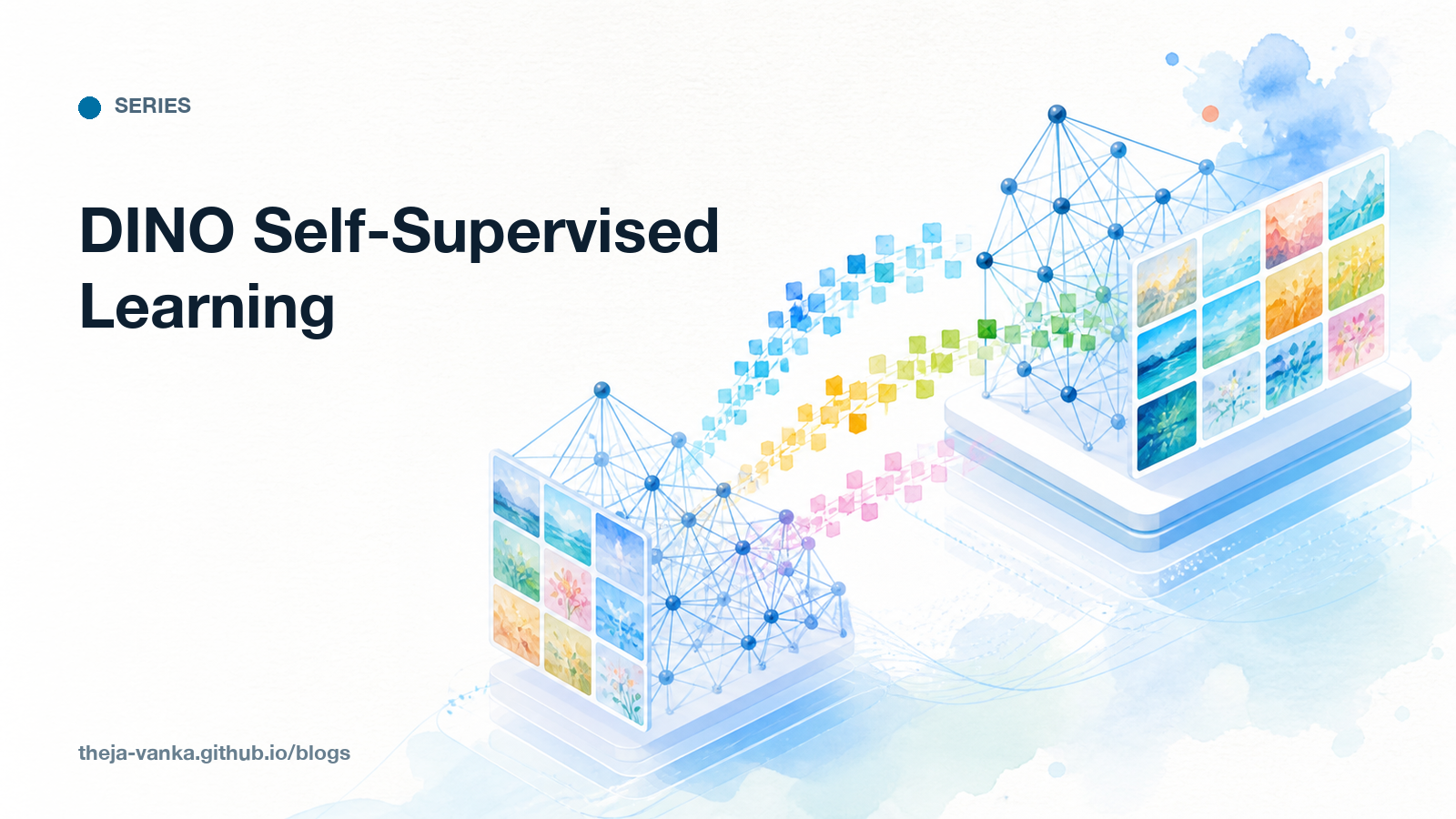
10 partsIntermediateDINO Self-Supervised Learning
Self-supervised vision learning from first principles through the DINO family — student-teacher training, DINOv1 to DINOv3, TIPS pretraining, and language-grounded detection.
~83 min totalSeries Paths
23 curated sequences — from first principles to working code, no context-switching, no half-finished tutorials.
23 series found
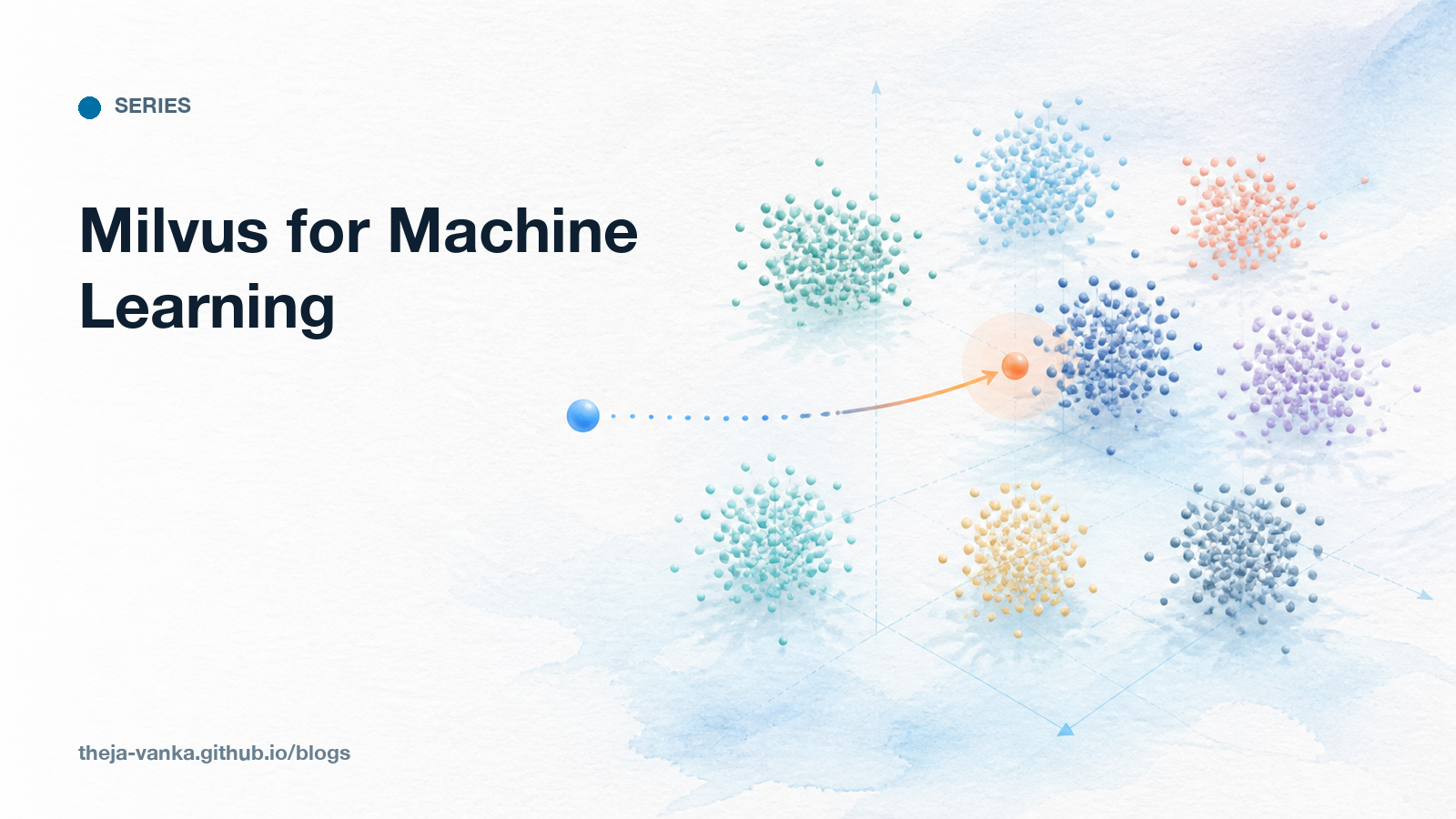
10 partsIntermediateSelf-supervised vision learning from first principles through the DINO family — student-teacher training, DINOv1 to DINOv3, TIPS pretraining, and language-grounded detection.
~83 min total
3 partsAdvancedState space models and the Mamba architecture.

~38 min total
6 partsAdvancedKANs as a flexible alternative to MLPs, plus their convolutional extension — theory, math, and code.
~44 min total
4 partsAdvancedAutomated NAS from theory to practice with Optuna.
~54 min total
5 partsBeginnerCore detection and segmentation models — YOLO's real-time architecture from a beginner's guide through math to code, FCOS's anchor-free alternative, and Meta's Segment Anything.
~77 min total
3 partsAdvancedMatryoshka representation learning for vision-language models.
~19 min total
7 partsBeginnerUnderstanding, fine-tuning, and applying vision-language models — from BLIP-2 and LLaVA to LoRA fine-tuning and vision-language-action systems for robotics.
~180 min total
2 partsBeginnerFrom the original CLIP paper to a full implementation.
~48 min total
4 partsIntermediateFrom DDPM's foundational math through DDIM's fast sampling, latent diffusion models, and the FLUX architecture — how modern image generation actually works.
~74 min total
3 partsIntermediateGenerative image models from basics to precise control.
~31 min total
4 partsIntermediateEfficient and densely-connected CNN designs — DenseNet's feature reuse and MobileNet's mobile-first efficiency, theory and code.
~53 min total
2 partsBeginnerA chronological deep dive into the networks that defined modern computer vision.
~46 min total
4 partsIntermediateHow attention powers modern vision models — Transformers vs CNNs theory and code, then a full Vision Transformer guide and implementation.
~33 min total
5 partsBeginnerScale PyTorch across GPUs with Accelerate and Fabric.
~36 min total
5 partsIntermediateOrchestrating and serving ML models in production — Kubeflow pipelines on Kubernetes and LitServe deployment with Docker.
~49 min total
3 partsAdvancedExperiment tracking, best practices, and CI/CD with MLflow.
~30 min total
4 partsAdvancedUsing Milvus as a vector database for computer vision, model training, and active learning — including influence-based sample selection.
~114 min total
3 partsAdvancedSparse MoE from theory through GShard to Switch Transformer.
~32 min total
8 partsAdvancedMake models faster at inference — quantization, edge deployment, compilation, efficient attention, KV cache compression, structured generation, and ONNX Runtime.
~157 min total
11 partsBeginnerPython language features, tooling, and Rust extensions every ML engineer should know — decorators, functools, itertools, concurrency, Python 3.14, Rust, data tooling, and metric visualization.
~116 min total
2 partsAdvancedGet started with PyTorch Lightning and migrate your existing PyTorch code.
~14 min total
5 partsAdvancedSqueeze every bit of performance out of your PyTorch training — data loading and augmentation, AMP, custom CUDA, and collate speed-ups.
~44 min total
4 partsIntermediateCommentary on the latest in computer vision and machine learning — conference takeaways, model reviews, language trends, and framework reflections.
~54 min total